Schedule content by day and time
Build playlists and assign them to screens for specific days, time windows, locations and campaigns.

Build playlists and assign the right content to the right screen at the right time from the JSNET Kiosk cloud dashboard.
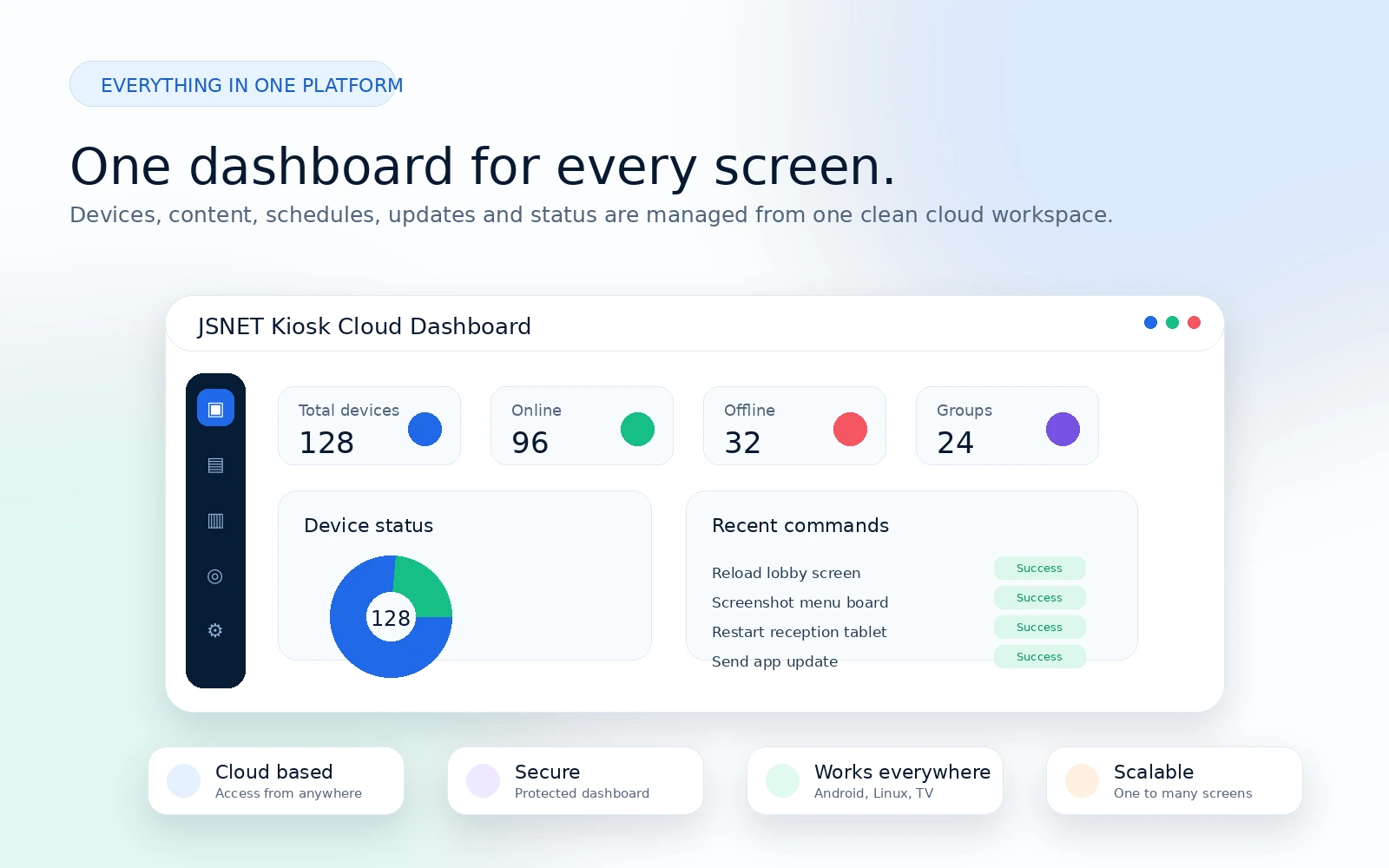
This page follows the same public website structure: kiosk app, device management, digital signage, remote commands, playlist scheduling and SaaS dashboard.
Schedule playlists for kiosk and digital signage screens by device, group, tenant, day and time with remote cloud management.
Build playlists and assign them to screens for specific days, time windows, locations and campaigns.
Device groups make it easier to manage many displays without editing each screen separately.
Normal schedules can work together with audience-aware playlist rules on supported kiosk players.
Business screens need content control, device status, remote support and reliable playback.
JSNET Kiosk workflow supports managed Android kiosk screens, Linux kiosk players and digital signage networks.
JSNET Kiosk workflow supports managed Android kiosk screens, Linux kiosk players and digital signage networks.
JSNET Kiosk workflow supports managed Android kiosk screens, Linux kiosk players and digital signage networks.
JSNET Kiosk workflow supports managed Android kiosk screens, Linux kiosk players and digital signage networks.
Common questions about Playlist Scheduling Software for Digital Signage Screens.
Yes. JSNET Kiosk is designed for Android displays and Linux kiosk players.
Yes. The cloud dashboard supports device status, playlists, schedules and remote commands.
Pair the screen, assign content, schedule playback and monitor the device remotely.
Install JSNET Kiosk app or player
Pair the device with secure code
Add URL, image, video or playlist
Schedule content for location or group
Monitor status and commands
Use one platform for different business screen scenarios.
Move between product pages, use cases and comparison pages without leaving the main site structure.
Use JSNET Kiosk for Android kiosk deployments, Linux kiosk players, digital signage playlists, restaurant menu boards and remote screen networks.